Thursday, July 12, 2018

Studying Ancestors: getting beyond birth dates and grave sites

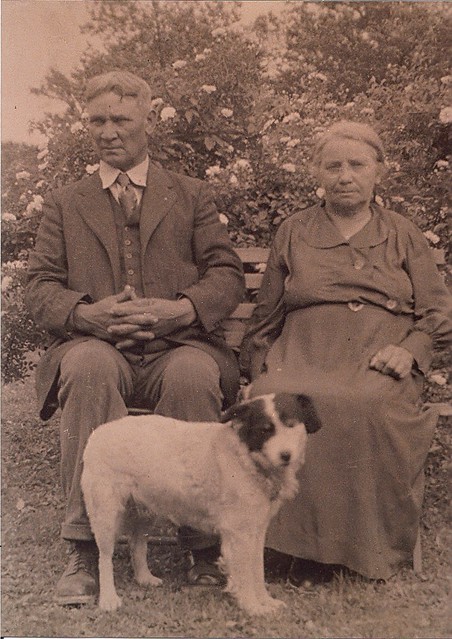
Beasleys of Western KentuckyIn September 1908, at 30 years old, in rural Kentucky, my great-grandmother had her first child, a son, Walter. He was born on the 8th and died on the 12th. I don't know why he died.

In early August 1909, my great-grandmother had her second child, also a son. She named him Otto, after a friend of the family. A year later, in late October, she strapped little Otto to her back so she could work in the fields. And sometime later, she took little Otto off her back, and he was dead.

I don't know if she and my great-grandfather were still sharecroppers then when Otto died or if by then they had their own farm, but I know that she had to work, just as millions of women before her and after her have had to work. She had no choice but to strap that baby to her back and go into the fields. The horror of that moment is not something I think I could have survived. She did survive it. She had nine more children, eight of whom survived infancy, including my paternal grandmother. She had her last child at 44.

I knew my great-grandmother - I was 10 when she died. To me, she was a quiet, sober woman who I never saw smile or laugh. I'm not sure she ever said a word to me. I admit to being afraid of her, sitting in silence, speaking only to fuss at my beloved great-grandfather who was constantly joking and making fun for his great-grandchildren. She was very frail by the time I knew her, and my grandmother, her daughter, directed me to brush her hair once. I stood behind her wheelchair, brushing that long, long gray hair, terrified I'd hurt her. It was only after she was gone that I learned of the story of Otto and the other two children - Walter and Edgar - that died so young. Her father died when she was just 6 years old, and as I understand it, she had to leave home quite young to work for some other family. She then moved to Henderson, Kentucky, more than 60 miles away, to work for another family. She married so late in life - what hardships did she experience before then, being a single woman in her teens and 20s working as a servant? She lost three babies, she had to feed her family when the Depression hit, and she struggled with a paralysis that left her wheelchair-bound for more than half her life - she lived to 98. No wonder she never smiled.

I don't fantasize about the past in the USA, or anywhere else, as some kind of idyllic, magical time. I think about all the children that died like my infant great Uncle. Or from filthy water. Or from malnutrition. I think about girls and women who never even had time to dream because they were too busy trying to survive. Poverty isn't some simpler lifestyle where life was easier: poverty is death in infancy, death in childbirth, death in the fields, death in a mine. It's lack of choices, lack of even time for imagining anything better. As I drove through rural Afghanistan in 2007, where people worked in fields and with animals under a very, very hot sun, a fellow aid worker remarked how beautiful the lifestyle was, how it was a shame to bring them aid and development if it meant they would have to give up their beautiful, simple life. I almost threw him out of the SUV.

I think about my great-grandparents and the various women I've tried to help as a humanitarian worker at least once a day, usually when I'm running the kitchen faucet to cook, or when I'm camping and I'm walking with a container to a communal faucet or pump. I make no apologies for wanting every person in the world to have that access, and nor any apologies for not mourning the "simple" life we'll lose if that happens. Good riddance.


Monday, July 9, 2018

Rethinking "indigenous" & DNA results

When Ancestry.com said that most of my DNA was a match with the people of Scotland and Ireland, I was thrilled! These are countries I love very much. I love their folk music in particular - yes, even bagpipes. I've spent a few weeks in each place and, in particular, I have loved visiting the megalithic cairns and stone circles of the regions. I don't think these neolithic stone structures are magical, but I do think they are amazing: ancient people trying to figure out the timing of the seasons, trying to predict the weather and, perhaps, harness the power of nature and the stars. I thought, wow, the next time I see those stone circles in Kilmartin, I'm going to relish that my ancestors were involved in building them!

Welp, not so fast. Not only because DNA tests are wildly misinterpreted and inaccurate with regards to what we think they are telling us (more on that later), but also because the people I'm descended from did not build those cairns and stone circles.

It was brown-eyed, brown-haired people with faces that are similar to those in Italy or Tunisia or the Middle East that built the stone monuments you see in Irish tourism ads. The genetic profile of these early Irish settlers indisputably originates in the Middle East. Their closest modern relatives — genetically — are the inhabitants of the Italian island of Sardinia. Nearly all of their tools and implements were made from natural products like stone and wood. They were farmers and they were lactose intolerant - they could not drink milk into adulthood without a lot of indigestive discomfort.

However, their DNA is almost entirely absent from the population of modern Ireland and Scotland - this absence indicates that at some point, these people, these stone circle builders, lost out to a new and very different population. In fact, they disappeared from most of Europe, except for Sardinia. For some reason, the descendants of those early Neolithic farmers were left undisturbed on Sardinia.

The DNA of the people that replaced these stone circle builders, the DNA held by the people we call Irish and Scottish today, appears to have originated in the steppes of what is now Ukraine and southern Russia. These newcomers had lactase persistence - they could drink milk into adulthood (as can I - looooove milk).

The genetic record indicates that the local population of stone circle builders was killed rather than that they integrated with the invaders - that may have been a result of war or a result of diseases brought by the newcomers for which the locals had no natural immunity. We may never know.

Here is the article from PRI that explains more. And here is a BBC article that explains it as well.

I still love those cairns and stone circles of Scotland, Ireland, Northern France and parts of England. I wanted so much to be descended from the creators of those. But I'm not - and neither are most of the people of Scotland and Ireland now.

And that brings me to another point: DNA tests. They are a lot of fun, they are based on science, but they are also subject to human interpretation, and I've been just as guilty of misinterpreting what they say as anyone. DNA tests do NOT tell you where your DNA comes from in the past - the tests tell you where on Earth your DNA is from TODAY.

My DNA results say my closest DNA matches are to the people of Ireland and Scotland NOW - not the people of Neolithic times that built those stone circles.

DNA testing companies chose a small number of people in a region to identify as their baseline genetic markers. That means that if there’s only a small number of, say, Central-Eastern African DNA samples that your DNA has been matched against, it’s less likely you’ll get a strong Central-Eastern African match, even if, in fact, you have ancestors from that region. That means that, in fact, you could be American Indian even if your DNA results don't say so.

And with all that said... I wonder... What is heritage? What is my heritage? What isn't my heritage? Is it only through being a direct descendant of a culture that I get to call that culture "mine", or does that kind of ownership or affiliation come from being brought up in that culture?

I don't know.

Other blogs on heritage, culture and who we think we are:

Ethnic, cultural, gender identity - good luck with your definitions

What does it mean to be "white" in the USA?

What is Southern heritage? What is worth celebrating?

Tuesday, June 26, 2018

Calls for civility

We call lunch counter protests civil disobedience, but they weren't seen at all as civil by most white Southerners - and probably most Whites in the North. They were seen as provocative, mean-spirited - as attacks. Same for the marches in the 1960s - most of which were illegal and all of which blocked traffic and disrupted the day of many people - they were peaceful, but they also were infuriating to many. I remember the amazingly provocative but peaceful acts by Queer Nation - we called them civil disobedience because they weren't violent (though the response often was), but they were LOUD, they were disruptive, they pissed people off - and they were key in changing how LGBTQ people were treated (still so, so far to go).

Peaceful means free of violence - but it doesn't mean polite, it doesn't mean not-provocative, it doesn't mean quite and polite.

I also want to note that when Christian terrorists were bombing clinics and shooting doctors and other clinic staff back in the 1980s and 1990s, there was no level of outcry against the violence that came anywhere close to the loud, constant pleas of politicians for reproductive rights advocates to "compromise" so that these terrorists wouldn't be "provoked" to violence.

And so, dearest Trump administration: the non-violent disruptions of your enjoyment of cafes and movies shall continue.

And for those who feel uncomfortable to observe this: good.

Tuesday, June 19, 2018

silence is privilege

You were silent when he called immigrants rapists.

You were silent when he used vile terms to describe women and bragged about sexual assault.

You were silent when he insulted Gold Star families and John McCain.

You were silent when he said about Nazis "Some are good people."

You were silent when he tried to ban Muslim refugees and legal immigrants.

You were silent as teachers of your own children protested in the streets and at state capitals across the country.

You were silent when his supporters said teachers should be armed.

You were silent as his appointees worked against public schools, shrunk public lands, got rid of regulations against banks that caused the most recent economic meltdown and removed regulations for clean air and water.

You were silent as words like "climate change" and "reproductive rights" were removed from official government web sites.

You were silent as the news broke that parents and children are separated at the border and that there is NO system at all for reuniting parents with children.

You say you don't comment because "politics is just so exhausting" and "I'm so busy with my kids" and "I don't want to upset anyone."

Your silence is privilege.

Your silence is also approval of what's happening now.


Friday, June 8, 2018

Travel, food and pain

I've got two May episodes of Anthony Bourdain: Parts Unknown recorded on my DVR. I record most of them and we watch them as we can over several weeks, sometimes months. One is for Uruguay. One is for West Virginia.

But, of course, none will be as great as the moment Bourdain finally discovered The Waffle House.

Yes, I'm a fan. I have been since No Reservations. Stefan and I discovered him together, and were thrilled to find someone who travels and eats like we like to - but without the motorcycle. And his observations, his phrasing - for someone that wasn't a trained writer, he was an amazing writer. And as for his humor - I'd have to pause the show frequently to laugh (I didn't want to miss anything).

I am talking about Anthony Bourdain in the past tense. Because as of this morning, that's how we talk about Anthony Bourdain.

Back in 2014 or so, I was in Kentucky at my Mom's house. My Mom and I were in her kitchen. She was sitting at the table and I was walking around doing something and blabbling. I don't remember what we were talking about, but at some point, I mentioned Anthony Bourdain. And my Mom got a wicked grin on her face, shook her had, looked away from me and said softly, "Oh, that Anthony Bourdain..." Her girl crush was OBVIOUS. It's one of my favorite stories about my now 80 year-old mother.

Right there with ya, Mom.

I always dreamed of a "Parts Unknown" featuring Anthony Bourdain sampling Kentucky burgoo, country ham, BBQ and bourbon. He could have gone to Metzger's for the famous bean soup, and to Louisville for a hot brown and for Derby pie. This all should have happened.

I had my conversation all planned for when I met Anthony Bourdain: I was going to thank him for his show in Congo. I loved that episode because it sums up what I've found so often when traveling abroad to places I have sometimes dubbed "Crapistan": finding a lot of people are still trying to be their best selves, trying to be dignified and worthy of respect. As this site put it, in this episode Bourdain found "Railway workers that show up to work without pay to keep the railway ready for action, library staff that organize and clean a long-forgotten collection, and a society that would buy soap over a sandwich to stay clean."

Don't get me wrong: I don't think all people, at their core, are good, and I don't think Anthony Bourdain did either. I think this world is filled with millions of shitty people who aren't kind, will never be kind, hurt others without a second thought and would take absolutely everything I love and value without any regrets whatsoever - or just don't really care. And so much goes wrong in this episode, and at the end, Bourdain starts contemplating if, in fact, some things were better under colonial rule, and feeling conflicted about that and, again, I totally get it: it's a conversation my husband and I have had in countries formally controlled by another country, or a dictator, or when we've viewed the horrific conditions in a museum in a country demanding the return of ancient artifacts now housed, safely, beautifully, somewhere else. When you're a leftie dedicated to democracy and self-rule and cultural respect, it's a stark reminder that applying values to life ain't simple.

But I also believe there are millions of really good people in the world, in every part of the world, and in some of the poorest, most violent parts of the world, they are just trying to do the best they can. And often, they do some really beautiful things. And prepare some really delicious food. And even if the food isn't delicious, they are often really excited that you're eating it.

Finding out Anthony Bourdain was a movie fan sent me over the moon. He drank them up and studied him the way I do. TCM is like a drug to me, especially when they choose some not-so-obvious theme: a day of anti-fascist movies. An evening of 1950s Latino cinema. I exasperate my husband with the comment "Oh my God, look at that camera angle!" during joint TV watching.

Here's a Bourdain quote from an interview in The Daily Grindhouse last year:

The crew and I used to sit down on No Reservations (and now Parts Unknown) and talk long before we got to the location, or even planned the shoot, about film references, cinematography, editing style, and music. I’m such a film nerd and I’m constantly saying, ‘I want this episode to look like…” and I’ll mention some obscure film and chances are they haven’t seen it. But it’s like, you went to film school for fuck’s sake.

I knew Bourdain had a dark side, but I didn't go there. I didn't want to know. Speaking to The Guardian in January 2017, Bourdain said he had finally "put aside my psychotic rage, after many years being awful to line cooks, abusive to waiters, bullying to dishwashers." He added: "I was an unhappy soul, with a huge heroin and then crack problem. I hurt, disappointed and offended many, many, many people and I regret a lot. It's a shame I have to live with."

Maybe he couldn't live with it.

My father killed himself in 1996. He hung himself. I still feel profound sympathy for the people who had to experience the trauma of finding him and cutting him down. The coroner was also our family physician, and he said, "That one got to me. That one was hard." He was traumatized too. So many traumatized people - not just my grandmother, my mother or my siblings. So many, many others.

When people ask me why my father killed himself, I never know what to say. It's like asking, "Why did so-and-so get cancer?" There are a range of environmental, emotional and biological reasons anyone kills themselves - there's rarely just one thing, just like with cancer. Because that's what suicide is: it's when the cancer of the soul wins. I learned that through sitting through more than a year of Survivors of Suicide meetings and hearing the stories of oh-so-many left-behind family members. I also learned that suicide is rarely spontaneous - for most people, it's been thought about and planned for, even if the date keeps changing over years - I read doctors who say it's usually a spontaneous act, but dig deeper, and you find out the person had purchased that rope a year ago, or saved up those pain pills for months, or didn't buy an electric car because, eventually, they might want to fill their garage with toxic fumes, or got all their insurance policies in order a year ago - the option, the possibility, of suicide, is thought about often, and that it might be an option, eventually, gives people strength over weeks and months - even years. I also learned that the majority of people - maybe a slight majority, maybe an overwhelming majority - who commit suicide suffer from physical pain brought on by a chronic illness: everything from chronic pain from a car wreck years ago to addiction, even if they aren't using anymore, to migraines to chronic indigestion.

Don't ask why someone kills themselves unless you are ready to dig deep and explore the reasons for months, even years, and ultimately never get a simple explanation.

My heart breaks for Bourdain's daughter, whom he so obviously adored, his wife, and every person who ever loved him - watching one of the CNN anchors be unable to speak this morning was absolutely heart-breaking. But it's his daughter who dominates my thoughts. She needs to be surrounded by love and support and concern for many years to come.

Of the many horrific consequences of a person's suicide is that it increases the likelihood of the person's family and friends and colleagues - even acquaintances - to commit suicide. That's what I worry about most - not just family, but people all over the world, learning of this, and who might now think suicide is a good choice for themselves as well. In the USA, the National Suicide Prevention Lifeline is 1-800-273-8255. I hope anyone contemplating suicide will call that number. It's available 24 hours a day, seven days a week.

I'm sad. But I'm also angry. And I get to be angry. Don't chastise people for being angry over this. They get to feel it. They get to express it. There are moments denied and memories now tainted and pain left behind and that is permanent and a tremendous amount to deal with for those left behind- and it's perfectly normal and natural and appropriate to feel anger, even betrayal, when this happens. Peter Sagal wrote a series of tweets that were compiled into an essay, about his own plans for eventual suicide and battles with depression, and he paraphrases someone else who lost a loved one to suicide, who said "that you might think suicide ends your pain, but it just shifts and magnifies it to everyone else. You’re taking your agony and handing it to your family, your friends, wrecking their lives as you end your own." And that's where my anger comes from, where many other people's anger comes from. When you lose someone to suicide, you might understand if you don't now.

So much more to say... here's a great blog by Rachel Zimmerman that says much of what I'm thinking.

So much left undone. No more new insights from Anthony Bourdain. The world is a sadder place for his passing, but a much better place for him having been here.


Tuesday, June 5, 2018

Taking up space

So as my patient apologized to me for the inches of her waist and the heaviness of her breasts and the jiggle of her arms, I thought of all the ways that we humans socialized as females are taught to take up less.

Don't talk too loud.

Don't be too right.

Don't firmly state your opinion, instead precede it with an apology and a deferential "this is just something I've been thinking", Lest in a moment of being strong and deft of mind we be renamed Bitch.

Don't show too strong an emotion, for fear of labels like "Crazy", or --gasp-- "hysterical", a condition named after what is apparently our defining organ??

From an incredible essay by a friend of a friend. The entire essay is so worth reading.

Monday, June 4, 2018

Frenemies & tall poppies

Among the many, many things I haven't figured out in my 50 plus years on Earth is the whole frenemy thing. It takes me months, sometimes a few years, to figure out that a friend isn't really a friend. Have you?

My first frenemies were my first childhood neighborhood friends, two girls who, individually, were lots of fun, but when it was the three of us, suddenly, things changed: they would look at each other and eye roll over something I said, particularly something honest and important to me, like a book or movie character. Something one of them enjoyed with me, like watching and laughing hysterically over The Wizard of Oz, became something to deride and deny just days later when the three of us came together - "I don't watch movies for babies. I can't believe you made me watch that." I'll never forget their delight in telling me their new nickname for me: "The Big Word Mama": they thought my vocabulary was too big. Yes, really. So I quit talking around them about the books I was reading, and for a while, kept pretending playing with Barbies was fun - until Star Wars came out and I realized movies were, indeed, infinitely more fun than those two.

Thankfully, it's been really easy to find all sorts of wonderful friends since then, and over many years. I've no idea what happened to those first to frenemies. And I don't really care. Except that versions of them do keep showing up every few years and I never seem to recognize them early enough.

I talk a lot. A LOT. About politics, travel, movies, books, my dog, my cat, my yard, my drug-dealing neighbors, a dream I had this week... whew, it's a LOT. And that's who I am. And I'm okay with it, and I'm okay with people who discover it and slowly walk away because it's too much for them. I'm not everyone's cup of tea. I'm often not my own cup of tea.

But I also listen. I actively listen. I ask questions about whatever a friend, in that moment, thinks is important: their family problems, their job problems, their neighbor problems, their dreams, their own travels, whatever. I could tell you a great deal about everyone I have ever called friend. I am genuinely interested in the lives of my friends. That's why they are my friends: I find them interesting.

I might start to realize all is not as it seems in a friendship when the interruptions start, those little aside, "just kidding" digs. I start to tell a story and hear a not-so-quiet, "Here she goes..." - not said to me, but to someone else, yet most certainly meant for me to hear. And then, if I do stop look over for an explanation, I hear "Oh, I'm just kidding!" Or I say how much fun I've just had on an incredible camping trip and as I'm waxing poetic, hear a decisive "I hate camping." I stop. Because the comment is made so I'll stop. Why was it necessary to say, specifically and solely in response to a person's love for something, that you hate it? It's a power thing. "Your opinion is invalid... even stupid." When someone is enthusing about a movie or book they love that I hate, I usually clam up, because I know how weird it can feel to be so enthusiastic about something and have someone throw cold water on it. I won't share my opinion in those situations, where someone or a group talking about how much they loved some movie I hated, until I'm asked, "What did you think?" And, being who I am, I usually apologize for not liking said movie or book and will say all sorts of qualifying things like, "But I totally understand why people like it..."

At the time I hear that little insult comment, I never think, "Frenemy! Run!" I should, but I don't. I never realize that obvious sign that the person dislikes me, and that many of our outings together, outings I've enjoyed, have been followed by a rant to another friend later about how arrogant I am, how "she thinks she knows everything," or whatever the criticism. I find out only when the person spectacularly unfriends me in an email or phone call or as I'm passing by their yard, walking my dog. I've never needed Facebook for that attempt at frenemy humiliation - it happened long before the Interwebs. I just wish I could see it coming and start distancing myself instead of getting blind-sided.

So, here I am, more than 40 years after my first frenemy experience, and I'm having exactly the same experience. It's mind-blowing. There's even a new Star Wars movie out right now. It's pretty good, by the way...

Part of the reason I'm so frequently blind-sided by frenemies is because I walk around in life convinced no one talks about me because, really, who cares what I do or what I am or what I think? I'm nobody special, I do nothing worth talking about, not really. It may sound sad but, in fact, it's freeing: I don't think I'm worth talking about and, so, I usually don't worry what other people think. My general, constant feeling of unimportance in relation to others and what they spend their time thinking about has made me the greatest ex-girlfriend ever, because whenever I got dumped over the years - and I got dumped a LOT - I would just slink away with no attempt at a scene, no attempt to hang on nor punish. Friends would encourage me to do the late-night-drive-by-the-apartment, or the call-and-hangup or let's-go-where-you-know-he-will-be, and I would refuse: it's over, and I shall be under this rock until further notice. I sat through Fatal Attraction absolutely appalled, horrified and bewildered - why is she doing this?!?

But, of course, I hear people criticize other people, often people that are supposed to be our mutual friends, friends that we had a great time with just a few days before. They criticize how they raise their kids, they criticize how they spend money, they criticize their ideas, they criticize their relationships, they criticize their life choices, and on and on. And if they talk so much about other people, about our mutual friends, that means they talk about me. Which, again, I ask, really, why? There are SO many more interesting things to discuss... but also, why do I never see that frenemy warning sign early enough?

The big tell in the frenemy character is their utterance of a particular criticism.

I don't like her. There's just something about her I don't like.

That's it. No explanation. I ask, but I don't get details. I used to think, well, I guess she reminds them of a teacher that was really mean or a neighbor that was rude or the girl some boyfriend dumped them for. But I've realized that's not it. They don't say why because they don't want to admit what it is that they don't like about them, because they know it's a ridiculous reason, like jealousy: they hate that person's success, or their intelligence, or their terrific body, or their wealth, or their perceived privilege. Maybe they know that and just won't say it. Or maybe they just aren't willing to really think about the why.

And then there's that reason for disliking someone that has always confused me:

She thinks she's so smart / better than everyone / so special / so perfect.

My response is usually, "Does she? How?" And I don't get told something like, "She believes in an aristocratic hierarchy and she's at the top" or "She believes she's genetically superior to everyone because of her DNA", both explanations of which I would find repulsive but a good source for the label. No, the response is something like, "She just acts like it."

It's an insult that says much more about the person saying it than the subject of the insult.

Why aren't women allowed to be confident? Self-assured? Ambitious? Why is a woman with knowledge and expertise and ideas expected to keep all of it to herself, or to reveal such gently, in a non-threatening way? Why are men allowed to be openly opinionated and to enjoy debates and spout ideas while women who do these things get branded as She thinks she's so smart / better than everyone / so special / so perfect?

There's an aspect of many cultures that, in the English-speaking world, is called the tall poppy syndrome: in a field of poppies, it will be the tallest poppy that gets cut down, because it stands above the others - not because it really is superior, but because it dares to be taller, to be noticed. Tall poppy syndrome is the desire by people to cut down a person they are jealous of or feel threatened by because of that person's abilities or achievements.

That statement, She thinks she's so smart / better than everyone / so special / so perfect, is a perfect example of tall poppy syndrome. So what if she thinks she's smart? How in the world does that affect you, personally? As long as confidence or expertise doesn't keep someone from seeing something or being aware of something that they really should be seeing, or doesn't encourage them to engage in destructive behavior, who cares?

Some version of you think you are smarter than me has been the insult of choice by friends unfriending me. And I've no idea what to say in response.

Even up to the moment someone dumps me as a friend, I still think that person is smart - often smarter than me. And interesting - I think of my friends as very interesting, even the ones that decide they don't like me. That's why they are/were my friends: they have interesting insights. They are windows into worlds I don't experience: parenthood, small business ownership, teaching, being able to produce something by hand, and on and on. As I said, I could say so much about every friend, even the frenemies, about their dreams, their insecurities, their interests, their frustrations, their families. I really do listen.

Oh, well, eventually, I hope I'm going to get this right and not be blindsided by a frenemy. But if not, so be it. I guess giving someone something to talk about brings joy on some level. Hope it helps.

Meanwhile, the next Star Wars movie comes out in 2019.