If you paid attention in history class, you learned over and over how humans have always lived in a global society with frequent migrations: the hunger people had for spices, silks, food and items from other countries has always been there, different languages have always influenced each other, there has always been a global economy and while country and borders may change frequently, the influence that different countries have on each other has always been present, and different groups have moved into new places.
To pretend that "globalization" is something new and something that threatens your country's sovereignty is disputed by at least 10,000 years of recent history.
Also, you can love your country and love experiencing food, music and customs from somewhere else. You can be proud of your country and acknowledge that another country does some things better. It is ignorant and misguided at best and arrogant and reckless at worst to think otherwise.
Once again, Donald Trump is wrong.
Wednesday, September 26, 2018

Tuesday, September 18, 2018
what losing KLR means
Kawasaki is going to discontinue its KLR line of motorcycles. And I am sad.
 I have a 2008 KLR. It is my second motorcycle. I'm the third owner. I bought it when it had just 3700 miles on it. I paid $3500 for it. I adore it. My KLR has taken me up and down gravel roads to gorgeous, remote camp sites and intriguing, hidden ghost towns and vistas too beautiful for words, as well as on many thousands of miles of pavement. My KLR has been to 10 states and provinces in the USA and Canada, and in 2020, it's taking me through Baja, Mexico. In addition to making me an "adventure rider," my KLR also been my backup transportation when I need to take short trips around town.
Though this is an "adventure" or "dual sport" bike, I'll probably never do a back country discovery route (BDR) with my KLR, because those "roads" are beyond my skills, but my KLR could! I may have struggled to get to Silver City, Idaho via the back road from Jordan Valley, Oregon, but my KLR didn't at ALL.
In addition to loving all that my KLR is capable of, and how easy it was for my husband to do things to it so that it was low enough for me to ride (I'm 5' 4"), and how durable it is (I've dropped it twice), this motorcycle is affordable, even if you buy it new. You can get a new KLR for about $6700. By contrast, other dual sport motorcycles cost FAR more: a new Honda Africa Twin costs about $13,500. A new BMW F 700 GS costs about $10,000. A new F 800 GS is $12,300. A new F 800 GS Adventure is almost $14,000. That doesn't even get into the 1000 and 1200s.
What the KLR has given me access to is hard to put into words, but I'll try: it's been central to maintaining any physical and mental health I've held onto through my 40s and into my 50s.
And that's why I am so sad to hear that the KLR is going away. According to Tri County Honda Yamaha Kawasaki Polaris in West Virginia, Kawasaki announced on September 15 that, after 31 years of production, the company has discontinued production of the KLR. Apparently, it isn't selling well.
My fear is that this is another step making adventure motorcycle riding only for people who are financially elite. I can't afford to spend $10,000 on anything at this point in my life, and probably never will. And I'm far from alone in being in that position financially.
 If KLR sales are slumping, as they are for Harley Davidson, then Kawasaki has only itself to blame. I think all motorcycle companies do a LOUSY job of marketing. LOUSY. They will spend many thousands of dollars on photo sessions with greased-up almost-naked women, standing in high heels next to a motorcycle they don't know how to ride, but motorcycle companies won't bother to contact women who actually ride and that post fantastic photos of the places their motorcycles take them and say to them, "Hey, could we pay you a few hundred bucks to use these amazing photos in an ad campaign?" There's Facebook groups for women motorcycle riders, including niche groups like Women Adventure Riders for women that ride dual sport motorcycles. Are motorcycle dealers, designers and gear shops monitoring these groups and looking to see what REAL customers are saying? I rarely see product placement in movies or TV shows for motorcycles - do you know what it would do for sales to see a character in a halfway popular TV show riding a motorcycle even SOMETIMES? And I have never seen a motorcycle dealer have a display at a big event that attracts people under 50 or women - not at large concerts, not at big outdoor expos... Why not?
 There are so many people, particularly women, who think about riding a motorcycle but have no idea where to begin - I know because they approach me all the time when they meet me standing next to my bike or when they find out that I ride, in gas stations and grocery store parking lots and at rest stops and campgrounds. They are buzzing with questions and then start with their comments about how much they would love to learn to ride but don't know where to begin. They also write me because of this page on my web site talking about how I got started riding and this page on how I started riding a dual sport. Why do they approach me? Because I'm approachable - I'm an overweight 50ish woman riding backroads and having an amazing time and I won't shame anyone for being hesitant or intimidated for their questions about riding a motorcycle, including off-road. I'm no Dakar Rally rider, and they see me and realize they don't have to be either to take a gravel road to somewhere really amazing.
I promote motorcycle riding because of my passion for it - imagine what I could do if I had something to sell, if this were my full time, paid job!
The motorcycle industry, at least in the USA, cannot operate the way it has for decades. It must change and it must cultivate new riders, not just hope people will come along. Baby boomers are aging out of their motorcycle riding years, and middle-aged and young adults are burdened with debt - and getting rid of affordable motorcycles is going to further turn them away. Plus, the demographics of our nation is changing drastically - and that means the customers for any product are changing drastically. By 2050, the USA will be a place where white people will no longer be in the majority: our minority population, currently 30 percent, is expected to exceed 50 percent before 2050. In fact, most of America’s net population growth will be among its minorities, as well as in a growing mixed-race population. Latino and Asian populations are expected to nearly triple. What is the image of motorcycle riding that will make this changing demographic want to ride? The peace of mind? The adventure? The fun? The empowerment? The zen? The escape? The feeling of connection to the environment and the road? The role someone assumes as a motorcycle rider, a role that is far different from that of their day job, as a software developer, a checkout clerk, a delivery driver, an accountant, a Mom?
If the motorcycle industry takes away affordable adventure motorcycles, they can kiss that part of their industry goodbye, because it WILL die out. Is that really what they want?
And if you DO have a motorcycle, check out the fantastic products my husband has to offer:


Adventure Motorcycle Luggage & Accessories
www.coyotetrips.com
Aluminum Panniers and Top Cases,
Top Case Adapter Plates,
Tough Motorcycle Fuel Containers, & More
Designed or Curated by an experienced adventure motorcycle world traveler
Based in Oregon
You won't find these exact products and this level of quality, at this price, anywhere else - available only from Coyotetrips
Also see:
Nonprofits can learn from motorcycle manufacturers? Yes!

Though this is an "adventure" or "dual sport" bike, I'll probably never do a back country discovery route (BDR) with my KLR, because those "roads" are beyond my skills, but my KLR could! I may have struggled to get to Silver City, Idaho via the back road from Jordan Valley, Oregon, but my KLR didn't at ALL.
In addition to loving all that my KLR is capable of, and how easy it was for my husband to do things to it so that it was low enough for me to ride (I'm 5' 4"), and how durable it is (I've dropped it twice), this motorcycle is affordable, even if you buy it new. You can get a new KLR for about $6700. By contrast, other dual sport motorcycles cost FAR more: a new Honda Africa Twin costs about $13,500. A new BMW F 700 GS costs about $10,000. A new F 800 GS is $12,300. A new F 800 GS Adventure is almost $14,000. That doesn't even get into the 1000 and 1200s.
What the KLR has given me access to is hard to put into words, but I'll try: it's been central to maintaining any physical and mental health I've held onto through my 40s and into my 50s.
And that's why I am so sad to hear that the KLR is going away. According to Tri County Honda Yamaha Kawasaki Polaris in West Virginia, Kawasaki announced on September 15 that, after 31 years of production, the company has discontinued production of the KLR. Apparently, it isn't selling well.
My fear is that this is another step making adventure motorcycle riding only for people who are financially elite. I can't afford to spend $10,000 on anything at this point in my life, and probably never will. And I'm far from alone in being in that position financially.


I promote motorcycle riding because of my passion for it - imagine what I could do if I had something to sell, if this were my full time, paid job!
The motorcycle industry, at least in the USA, cannot operate the way it has for decades. It must change and it must cultivate new riders, not just hope people will come along. Baby boomers are aging out of their motorcycle riding years, and middle-aged and young adults are burdened with debt - and getting rid of affordable motorcycles is going to further turn them away. Plus, the demographics of our nation is changing drastically - and that means the customers for any product are changing drastically. By 2050, the USA will be a place where white people will no longer be in the majority: our minority population, currently 30 percent, is expected to exceed 50 percent before 2050. In fact, most of America’s net population growth will be among its minorities, as well as in a growing mixed-race population. Latino and Asian populations are expected to nearly triple. What is the image of motorcycle riding that will make this changing demographic want to ride? The peace of mind? The adventure? The fun? The empowerment? The zen? The escape? The feeling of connection to the environment and the road? The role someone assumes as a motorcycle rider, a role that is far different from that of their day job, as a software developer, a checkout clerk, a delivery driver, an accountant, a Mom?
If the motorcycle industry takes away affordable adventure motorcycles, they can kiss that part of their industry goodbye, because it WILL die out. Is that really what they want?
And if you DO have a motorcycle, check out the fantastic products my husband has to offer:

Adventure Motorcycle Luggage & Accessories
www.coyotetrips.com
Aluminum Panniers and Top Cases,
Top Case Adapter Plates,
Tough Motorcycle Fuel Containers, & More
Designed or Curated by an experienced adventure motorcycle world traveler
Based in Oregon
You won't find these exact products and this level of quality, at this price, anywhere else - available only from Coyotetrips
Also see:
Nonprofits can learn from motorcycle manufacturers? Yes!
Tuesday, August 21, 2018
2018 Nevada motorcycle trip
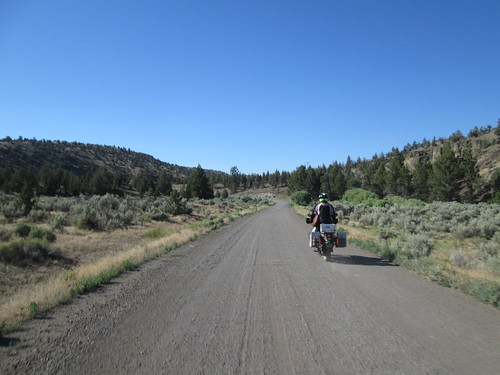
In the last two weeks of July, we went on our annual two-week motorcycle trip. This time, we toured Nevada, as well as parts of Oregon and a wee bit of California. We spent 13 days, going over 2657 miles / 4276 kilometers. We stayed at the historic hotel in French Glen, Oregon, rode around Steens Mountain, rode most of US Highway 50 in Nevada (the "loneliest road in the USA"), visited Eureka, Ely, Rachel and Tonopah, Nevada, stayed two nights in Great Basin National Park, stayed a night in Cathedral Gorge State Park and took the Extraterrestrial Highway.
You can read the travelogue or go straight to the photos.
As always, my goal isn't so much hey, look what I did! as it is here's advice if you want to do something similar.
Saturday, August 18, 2018
Milestone
As of this week, I have lived in the town where I live in Oregon longer than any one, single place, since I moved from Kentucky. The previous record was Sinzig, Germany - I lived there, in one place, for 4 years and 7 months.
I have already lived in Oregon longer than I lived in any other state, except Kentucky, and longer than I lived in Germany.
And, yet... the town where I live isn't home. Oregon isn't home. It's just where I live.
Part of the reason I feel this way is probably because I have moved so often since I left for university when I was 18. After just three years, I start feeling restless. It's not that I enjoy packing and unpacking - I don't, at ALL. I hate it. But I love getting to know a new place, discovering new places to see and new things to do. However, inevitably, I run out of new things to see and do. In addition, I don't seem to be able to find something to keep me tied to a place for long: jobs end, organizations close, volunteering fizzles when a leader changes, friends move, relationships fizzle, people turn out not to be who I thought they were, favorite places close up...
While Texas didn't quite suit me, I never felt like I didn't belong there, that I was unwelcomed there. I never got any attitude from native Texans about not being one myself. And you would think that wouldn't be the case, since no state has as many songs celebrating it as that state does. I love the Lyle Lovett Song That's Right, You're Not From Texas (but Texas Wants You Anyway). It so sums up how I felt there. If it weren't for the heat of the summer and Fall, I would have stayed. I made friends in Austin that are still my friends to this day - though I met all of them because of an online community for a particular kind of music we all love, not just through everyday interactions.
By contrast, in Oregon, if you aren't born here, you aren't wanted here, and those who are born here will say it online and to your face without hesitation. If you moved here from California - oh, heaven forbid you moved here from California. And Oregonians take it further: if you aren't born in the town where you live, they resent any actions you take to influence how things are done in the town: how the police conduct their business, how neighborhoods are defined, how schools are run, whatever. I have never lived in a place where politicians who aren't from a place have to emphasize how many years they have lived here, as if to justify their getting to live here, let alone run for office.
Since moving to Oregon - and particularly since moving to the town where I live in 2013 - I have looked for online communities and offline, onsite groups to join, volunteering, live music venues and arts scenes that would give me what I had in Austin: a feeling of belonging, a feeling of home. I have never made such a deliberate effort to get to know as many neighbors as possible. And nothing has worked out to make me feel like, yes, this is where I love living, this is where I belong.
Days after moving to Oregon, I felt like I had made a colossal mistake. The state, and Portland, weren't at all what I had envisioned or what people said about them. But after a year of floundering and whining, I decided I was going to be deliberate every day in finding something to like about where I'd chosen to live and deliberate in finding something enjoyable. That deliberation has lasted a full eight years. It's taken work and determination and I'm glad to have done it - I have found some amazing things in this state, including right here in Washington County where I live. Most native Oregonians haven't seen most of what I've seen in their state. I am frequently told by people right here in the town where I live, after telling them about something nearby, "Wow, I never even knew that was there. You know this place better than me." Treating Oregon as a place to explore, just like I do when I'm traveling, has been a great way to approach living here.
But my determination is wearing thin. Once again, as I've done so many, many times in my life, I am wondering, where do I belong? Where is home? That place that feels safe and welcoming and comfortable... that place you go for rest after the travel and adventures - where is my place? Because, after all this time, if it's not here, it never will be.
I still long for that moment of going to a place and thinking, yes, this is where I want to live, for the rest of my life, absolutely. And I know that it is a privilege to be able to choose where you live, one that is denied most people on Earth. So I feel selfish - unbelievably selfish - for feeling this way. But it's how I feel.
I do love my house. I just wish I could move it.
I have already lived in Oregon longer than I lived in any other state, except Kentucky, and longer than I lived in Germany.
And, yet... the town where I live isn't home. Oregon isn't home. It's just where I live.
Part of the reason I feel this way is probably because I have moved so often since I left for university when I was 18. After just three years, I start feeling restless. It's not that I enjoy packing and unpacking - I don't, at ALL. I hate it. But I love getting to know a new place, discovering new places to see and new things to do. However, inevitably, I run out of new things to see and do. In addition, I don't seem to be able to find something to keep me tied to a place for long: jobs end, organizations close, volunteering fizzles when a leader changes, friends move, relationships fizzle, people turn out not to be who I thought they were, favorite places close up...
While Texas didn't quite suit me, I never felt like I didn't belong there, that I was unwelcomed there. I never got any attitude from native Texans about not being one myself. And you would think that wouldn't be the case, since no state has as many songs celebrating it as that state does. I love the Lyle Lovett Song That's Right, You're Not From Texas (but Texas Wants You Anyway). It so sums up how I felt there. If it weren't for the heat of the summer and Fall, I would have stayed. I made friends in Austin that are still my friends to this day - though I met all of them because of an online community for a particular kind of music we all love, not just through everyday interactions.
By contrast, in Oregon, if you aren't born here, you aren't wanted here, and those who are born here will say it online and to your face without hesitation. If you moved here from California - oh, heaven forbid you moved here from California. And Oregonians take it further: if you aren't born in the town where you live, they resent any actions you take to influence how things are done in the town: how the police conduct their business, how neighborhoods are defined, how schools are run, whatever. I have never lived in a place where politicians who aren't from a place have to emphasize how many years they have lived here, as if to justify their getting to live here, let alone run for office.
Since moving to Oregon - and particularly since moving to the town where I live in 2013 - I have looked for online communities and offline, onsite groups to join, volunteering, live music venues and arts scenes that would give me what I had in Austin: a feeling of belonging, a feeling of home. I have never made such a deliberate effort to get to know as many neighbors as possible. And nothing has worked out to make me feel like, yes, this is where I love living, this is where I belong.
Days after moving to Oregon, I felt like I had made a colossal mistake. The state, and Portland, weren't at all what I had envisioned or what people said about them. But after a year of floundering and whining, I decided I was going to be deliberate every day in finding something to like about where I'd chosen to live and deliberate in finding something enjoyable. That deliberation has lasted a full eight years. It's taken work and determination and I'm glad to have done it - I have found some amazing things in this state, including right here in Washington County where I live. Most native Oregonians haven't seen most of what I've seen in their state. I am frequently told by people right here in the town where I live, after telling them about something nearby, "Wow, I never even knew that was there. You know this place better than me." Treating Oregon as a place to explore, just like I do when I'm traveling, has been a great way to approach living here.
But my determination is wearing thin. Once again, as I've done so many, many times in my life, I am wondering, where do I belong? Where is home? That place that feels safe and welcoming and comfortable... that place you go for rest after the travel and adventures - where is my place? Because, after all this time, if it's not here, it never will be.
I still long for that moment of going to a place and thinking, yes, this is where I want to live, for the rest of my life, absolutely. And I know that it is a privilege to be able to choose where you live, one that is denied most people on Earth. So I feel selfish - unbelievably selfish - for feeling this way. But it's how I feel.
I do love my house. I just wish I could move it.
Friday, August 17, 2018
When Father's Hurt, Even Kill, & Their Family Defends Them
Last month, a man in Utah was arrested for domestic violence. Hours after he was released from jail, he flew a small plane into his house. His wife and son escaped the house after the plane crash, but he died.
The day after the incident, I heard a comment from his daughter: "He’s not this person that’s being portrayed."
It's a jaw-dropping, but typical, comment from family and friends of men who attempt to harm or kill a family member or colleague or even a stranger, and it infuriates me.
This man attempted to kill his wife and, very possibly, wanted to kill his son as well. That's not a media portrayal, it's just the facts: the man drove to an airport, he boarded a plane his company owned, he got clearance for takeoff and he flew that plane into his family's home.
I'm always stunned by family members and friends in denial about a person that commits a violent act. It's a denial that results in comments like what his daughter said. Or comments by a woman that is frequently the target of her husband's physical or mental abuse. You don't know him. He's not always like this. He's more than this. This isn't him.
This IS him. A violent family member can be a very nice, supportive person sometimes, even most of the time. Just like a co-worker may be a fantastic colleague, someone you trust absolutely, and later you find out that person subjected another co-worker to sexual harassment. The good times are, indeed, who they are - but the oh-so-bad times are too.
Sometimes, the news hits too close to home. And this is one of those times. I wonder how many family members are silent as they hear this daughter deny her father's violence, who think, This is exactly who he was. But they will never say so...
The day after the incident, I heard a comment from his daughter: "He’s not this person that’s being portrayed."
It's a jaw-dropping, but typical, comment from family and friends of men who attempt to harm or kill a family member or colleague or even a stranger, and it infuriates me.
This man attempted to kill his wife and, very possibly, wanted to kill his son as well. That's not a media portrayal, it's just the facts: the man drove to an airport, he boarded a plane his company owned, he got clearance for takeoff and he flew that plane into his family's home.
I'm always stunned by family members and friends in denial about a person that commits a violent act. It's a denial that results in comments like what his daughter said. Or comments by a woman that is frequently the target of her husband's physical or mental abuse. You don't know him. He's not always like this. He's more than this. This isn't him.
This IS him. A violent family member can be a very nice, supportive person sometimes, even most of the time. Just like a co-worker may be a fantastic colleague, someone you trust absolutely, and later you find out that person subjected another co-worker to sexual harassment. The good times are, indeed, who they are - but the oh-so-bad times are too.
Sometimes, the news hits too close to home. And this is one of those times. I wonder how many family members are silent as they hear this daughter deny her father's violence, who think, This is exactly who he was. But they will never say so...
Sunday, July 15, 2018
Uncle Minnie
My maternal grandmother passed away last year. She was 101. She didn't tell me many stories when I was growing up, in contrast to my paternal grandmother, but she did tell me a few here and there when I was an adult and would visit my hometown every few years. When I was researching my family tree, I interviewed her for information, and at one point in that conversation, she told me about her "Uncle Minnie."
Minnie Howard was the daughter of the sister of my great great grandmother. It was her mother who was my aunt - my great great aunt and, therefore, Uncle Minnie was, in fact, my first cousin thrice removed.
Uncle Minnie was born in 1896. She lived all of her life in Alabama. And, according to my grandmother, Uncle Minnie was called "Uncle" because she wore men's clothes and dated a woman.
According to the 1930 United States Federal Census, Uncle Minnie was living with her mother in Perry County, Alabama, in a home they owned. She was 34 years old, though the Census form lists her birth year incorrectly. She's listed as the head of the household, as single, and as working as a farmer. The census says she didn't attend school but that she could read and write. At the top of the census form, for everyone listed on that particular form, it says that the "township or other division of county" for where she lived is Scott or Scotts Beat, District 4 in Perry County. There is no Scotts or Scotts Beat listed on any modern maps of Alabama, but after a lot of searching, I found some obituary online for someone I don't know that says "Scott's Beat" is "about eight miles west of Marion."
I never asked more questions about her when my grandmother said why she was called "Uncle Minnie" because I was so shocked that my grandmother was talking about such a thing - my brain completely froze. My grandmother was deeply religious - she was a Baptist and her husband, my grandfather, was a Methodist and after more than 75 years of marriage, on his deathbed, she STILL tried to get him dunked! But there she was, telling me matter-of-factly that my first cousin thrice removed dressed as a man and dated a woman - no judgment, no condemnation. She could have been telling me her hair was blond and had a mule named Daisy.
 I like to imagine Uncle Minnie at 30 or so, in a formal men's suit, hair slicked back, looking like Marlene Dietrich. Maybe she's wearing a beret. Elegant. Mysterious. But the reality is that, as a farmer in very rural Alabama, she was probably in denim overalls and boots most of the time, not at all elegant, maybe even being perceived as a man by people who saw her and didn't know her. Further contributing to the denim overalls and boots theory is that she died February 14, 1971, gored to death by a cow that she was trying to separate from a calf. The article says she was "one of the largest cotton and cattle farmers in this part of the state, operating a farm of almost a thousand acres, partly in Hale County and the remainder in Perry."
Uncle Minnie died at 65. She's buried at Mount Hermon United Methodist Church Cemetery in Mount Hermon, Hale County, Alabama.
With no legal spouse and no children, I'm afraid she's going to be lost to history - as most of us are. But I don't want her to be. Even if she didn't look like Marlene Dietrich.
Minnie Howard was the daughter of the sister of my great great grandmother. It was her mother who was my aunt - my great great aunt and, therefore, Uncle Minnie was, in fact, my first cousin thrice removed.
Uncle Minnie was born in 1896. She lived all of her life in Alabama. And, according to my grandmother, Uncle Minnie was called "Uncle" because she wore men's clothes and dated a woman.
According to the 1930 United States Federal Census, Uncle Minnie was living with her mother in Perry County, Alabama, in a home they owned. She was 34 years old, though the Census form lists her birth year incorrectly. She's listed as the head of the household, as single, and as working as a farmer. The census says she didn't attend school but that she could read and write. At the top of the census form, for everyone listed on that particular form, it says that the "township or other division of county" for where she lived is Scott or Scotts Beat, District 4 in Perry County. There is no Scotts or Scotts Beat listed on any modern maps of Alabama, but after a lot of searching, I found some obituary online for someone I don't know that says "Scott's Beat" is "about eight miles west of Marion."
I never asked more questions about her when my grandmother said why she was called "Uncle Minnie" because I was so shocked that my grandmother was talking about such a thing - my brain completely froze. My grandmother was deeply religious - she was a Baptist and her husband, my grandfather, was a Methodist and after more than 75 years of marriage, on his deathbed, she STILL tried to get him dunked! But there she was, telling me matter-of-factly that my first cousin thrice removed dressed as a man and dated a woman - no judgment, no condemnation. She could have been telling me her hair was blond and had a mule named Daisy.

Uncle Minnie died at 65. She's buried at Mount Hermon United Methodist Church Cemetery in Mount Hermon, Hale County, Alabama.
With no legal spouse and no children, I'm afraid she's going to be lost to history - as most of us are. But I don't want her to be. Even if she didn't look like Marlene Dietrich.
Thursday, July 12, 2018
Studying Ancestors: getting beyond birth dates and grave sites
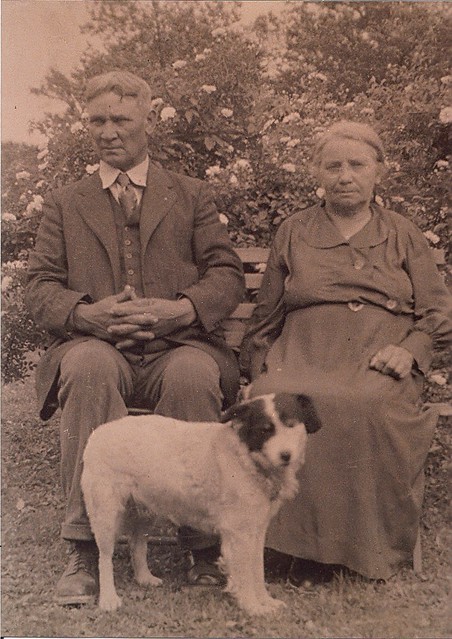 In September 1908, at 30 years old, in rural Kentucky, my great-grandmother had her first child, a son, Walter. He was born on the 8th and died on the 12th. I don't know why he died.
In early August 1909, my great-grandmother had her second child, also a son. She named him Otto, after a friend of the family. A year later, in late October, she strapped little Otto to her back so she could work in the fields. And sometime later, she took little Otto off her back, and he was dead.
I don't know if she and my great-grandfather were still sharecroppers then when Otto died or if by then they had their own farm, but I know that she had to work, just as millions of women before her and after her have had to work. She had no choice but to strap that baby to her back and go into the fields. The horror of that moment is not something I think I could have survived. She did survive it. She had nine more children, eight of whom survived infancy, including my paternal grandmother. She had her last child at 44.
I knew my great-grandmother - I was 10 when she died. To me, she was a quiet, sober woman who I never saw smile or laugh. I'm not sure she ever said a word to me. I admit to being afraid of her, sitting in silence, speaking only to fuss at my beloved great-grandfather who was constantly joking and making fun for his great-grandchildren. She was very frail by the time I knew her, and my grandmother, her daughter, directed me to brush her hair once. I stood behind her wheelchair, brushing that long, long gray hair, terrified I'd hurt her. It was only after she was gone that I learned of the story of Otto and the other two children - Walter and Edgar - that died so young. Her father died when she was just 6 years old, and as I understand it, she had to leave home quite young to work for some other family. She then moved to Henderson, Kentucky, more than 60 miles away, to work for another family. She married so late in life - what hardships did she experience before then, being a single woman in her teens and 20s working as a servant? She lost three babies, she had to feed her family when the Depression hit, and she struggled with a paralysis that left her wheelchair-bound for more than half her life - she lived to 98. No wonder she never smiled.
I don't fantasize about the past in the USA, or anywhere else, as some kind of idyllic, magical time. I think about all the children that died like my infant great Uncle. Or from filthy water. Or from malnutrition. I think about girls and women who never even had time to dream because they were too busy trying to survive. Poverty isn't some simpler lifestyle where life was easier: poverty is death in infancy, death in childbirth, death in the fields, death in a mine. It's lack of choices, lack of even time for imagining anything better. As I drove through rural Afghanistan in 2007, where people worked in fields and with animals under a very, very hot sun, a fellow aid worker remarked how beautiful the lifestyle was, how it was a shame to bring them aid and development if it meant they would have to give up their beautiful, simple life. I almost threw him out of the SUV.
I think about my great-grandparents and the various women I've tried to help as a humanitarian worker at least once a day, usually when I'm running the kitchen faucet to cook, or when I'm camping and I'm walking with a container to a communal faucet or pump. I make no apologies for wanting every person in the world to have that access, and nor any apologies for not mourning the "simple" life we'll lose if that happens. Good riddance.
Subscribe to:
Posts (Atom)